Cognitive Reserve: The Brain Concept That Explains Why Some People Age Sharper Than Others
Two people can have similar brain scans in later life and experience very different levels of cognitive decline — a gap that cognitive reserve helps explain. It is not about having a ‘healthier’ brain in a simple sense, but a more resilient one, built specifically through certain kinds of mental activity over years. Here is why reserve matters more than raw brain health alone, the activities that actually build it, and when starting has the biggest payoff.

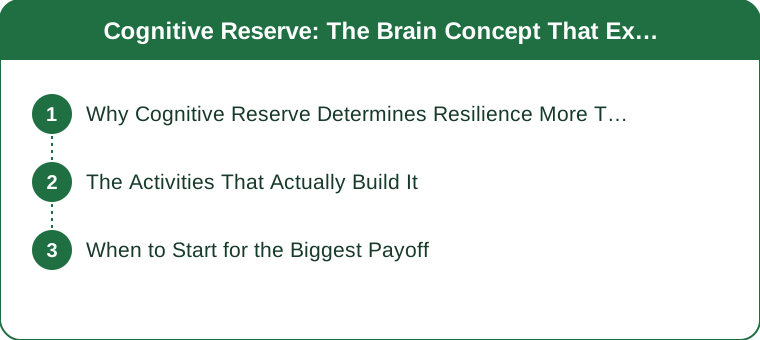
Why Cognitive Reserve Determines Resilience More Than Raw Brain Health
The concept explained: the the-reserve-is-a-buffer-not-a-brain-size (the cognitive reserve functioning as a buffer of alternate neural pathways and strategies the brain can draw on when primary ones are impaired — the it’s-about-flexibility-not-raw-capacity), the the-same-pathology-different-outcomes (the research finding people with similar levels of age-related brain changes showing very different symptom severity depending on reserve — the identical-brain-changes-different-lived-experience), the the-reserve-builds-through-use-not-genetics-alone (the reserve accumulating through a lifetime of cognitively engaging activity, not being fixed at birth — the it’s-substantially-buildable-not-just-inherited), the the-education-is-correlated-but-not-the-whole-story (the formal education correlating with reserve but ongoing cognitive engagement throughout life mattering independently and continuously — the it-keeps-accumulating-well-past-school), the the-reserve-explains-resilience-not-immunity (the reserve delaying and softening symptom onset rather than making decline impossible entirely — the buffer-not-a-forcefield), and the reframe (the cognitive reserve concept as explaining why identical brain aging produces different real-world outcomes — a genuinely buildable resource, not a fixed hand you’re dealt).

The Activities That Actually Build It
What the evidence points to: the learning-genuinely-novel-skills (the acquiring a new skill that is unfamiliar and challenging — a language, an instrument — building more reserve than passively repeating familiar activity from the learning-new-skill-brain logic — the novelty-and-challenge-are-the-key-ingredients-not-just-any-activity), the the-social-engagement-counts-as-cognitive-work (the complex social interaction requiring real-time cognitive processing that contributes meaningfully to reserve — the socializing-is-brain-work-not-just-brain-rest), the the-physical-exercise-supports-it-too (the regular aerobic exercise supporting the same brain systems that underlie cognitive reserve from the how-exercise-boosts-your-brain-guide logic — the movement-and-cognition-are-linked-not-separate-categories), the the-bilingualism-and-language-learning (the language learning specifically showing some of the strongest evidence among reserve-building activities in research — the language-learning-is-particularly-well-supported), the the-continued-work-or-purposeful-engagement (the sustained mentally engaging work or purposeful activity later in life continuing to contribute, not just early-life education — the it-doesn’t-stop-mattering-after-a-certain-age), and the frame (the reserve-building activities as genuinely novel skill learning, complex social engagement, aerobic exercise, language learning specifically, and sustained purposeful mental engagement — variety and challenge matter more than any single specific activity).
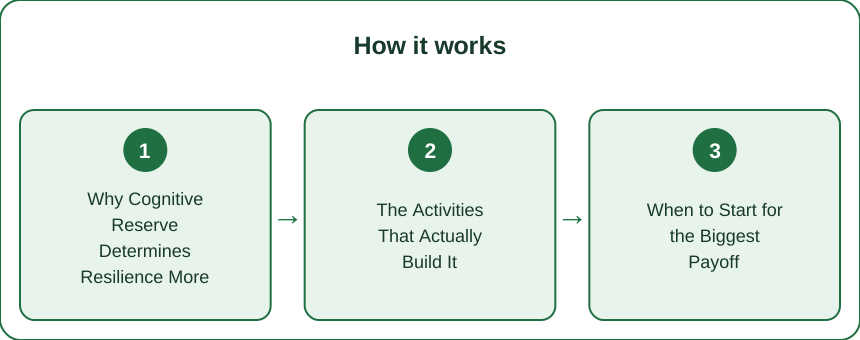
When to Start for the Biggest Payoff
The realistic timeline: the the-earlier-accumulation-compounds (the reserve built earlier in life having more time to accumulate and interact with later brain changes — the earlier-is-better-but-not-exclusively-so), the the-midlife-is-not-too-late (the substantial reserve-building still occurring through midlife engagement, meaning forties and fifties starts still meaningfully help — the midlife-still-has-real-upside), the the-later-life-engagement-still-helps (the even starting new cognitively engaging habits later in life showing measurable benefit, just with a shorter compounding window — the later-is-still-better-than-never), the the-consistency-over-years-matters-more-than-intensity (the sustained engagement over years mattering more than short intense bursts of brain training — the sustained-not-sporadic), the the-it’s-never-purely-too-late-to-start (the some benefit appearing at essentially any starting age, which removes the excuse to not begin — the some-benefit-at-any-age-removes-the-excuse), and the frame (the timing reality as earlier is better and compounds more, but midlife and even later starts still meaningfully help, with consistency over years mattering more than any specific starting age — the best time to start was years ago, and the second best time is now. This is general information, not medical advice.)
Cognitive reserve explains why two people with similar age-related brain changes can experience very different real-world cognitive outcomes — it functions as a buffer of alternate neural pathways and strategies built through cognitively engaging activity over a lifetime, not a fixed trait determined at birth. The activities with the strongest evidence for building it are learning genuinely novel and challenging skills like a new language or instrument, complex social engagement, regular aerobic exercise, and sustained purposeful mental engagement continued well into later life, with novelty and challenge mattering more than any single specific activity. While earlier accumulation compounds the most, midlife and even later-life starts still show measurable benefit, and consistency over years matters more than short intense bursts — there’s no age at which starting stops helping. This is general information, not medical advice.
Keep Reading
This article is for general informational purposes only and is not medical advice. Always consult a qualified health professional for guidance specific to you.