Brain Fitness: Keep Your Mind as Trained as Your Body
Brain training got branded as an app subscription, which is a shame, because the actual evidence tells a more interesting story: the things that build a durable brain look less like puzzle scores and more like a good life — movement, people, sleep and the right kind of difficulty. Here’s the real program.

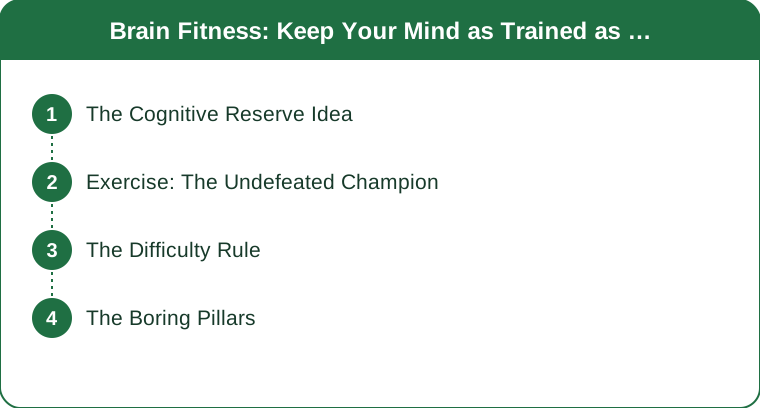
The Cognitive Reserve Idea
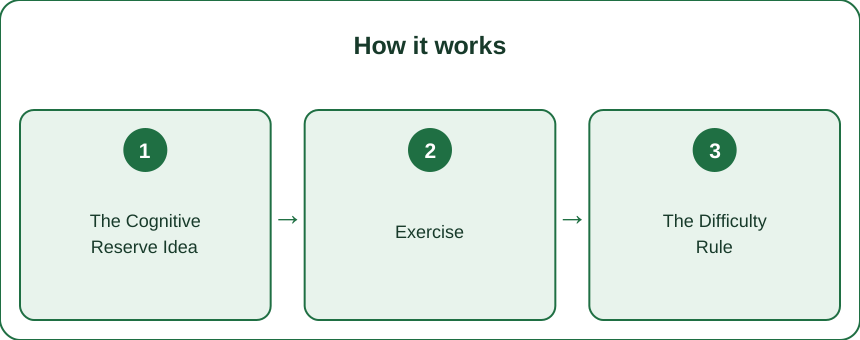
The organizing concept: cognitive reserve — the brain’s buffer, built over years, that lets it absorb aging and insult while staying functional. It’s built by novelty, challenge and engagement across a lifetime, and the earlier-and-longer, the better — but deposits count at every age. The encouraging research consensus: a meaningful share of cognitive decline risk tracks to modifiable factors. Modifiable is the operative word.
Exercise: The Undefeated Champion
The strongest single finding in the field: physical exercise — especially cardio, with strength training earning growing respect — outperforms brain-training apps for brain health, full stop. Movement drives blood flow, growth factors and new-connection support in ways no screen replicates; the memory-center (hippocampus) findings around aerobic exercise are some of neuroscience’s most replicated good news. The gym membership is a brain subscription.

The Difficulty Rule
What counts as brain training: things that are GENUINELY HARD FOR YOU and progressively so — a new language, an instrument, dance choreography, a sport with decisions (racquet sports keep showing up in the data), real conversations about complex things. The puzzle-app problem isn’t that puzzles are bad; it’s that you get better at the puzzle, not at life. Novelty plus difficulty plus progression — the same rules as muscle.
The Boring Pillars
The rest of the program: sleep (memory consolidation is literally a night-shift job — chronic short sleep is the brain’s worst modifiable enemy), social connection (isolation is a documented cognitive risk factor; the book club counts double as brain training and society), managing hearing and vision (untreated sensory decline accelerates cognitive load — the hearing-aid research is striking), and the food-and-vessels basics (what serves the heart serves the brain). The program summary: move daily, learn hard things, sleep well, stay in the room with people. No subscription required.
Cardio first, hard novelty second, sleep and people always. Brain fitness was never an app — it’s a life with difficulty and connection in it, compounding quietly for decades.
Keep Reading
This article is for general informational purposes only and is not medical advice. Always consult a qualified health professional for guidance specific to you.