What Chronic Multitasking Actually Does to Your Brain's Ability to Focus
Multitasking gets treated as simply doing two things at once, a temporary tradeoff in the moment — but the research on chronic multitasking suggests something more concerning: habitual multitasking may actually degrade the brain’s baseline capacity for sustained focus over time, not just in the specific moment of juggling tasks. Here is what the research actually shows and how to rebuild single-task focus capacity.

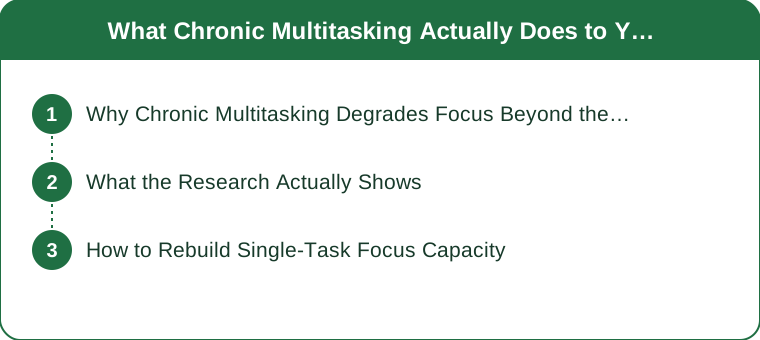
Why Chronic Multitasking Degrades Focus Beyond the Moment
The mechanism: the true-simultaneous-multitasking-is-mostly-an-illusion (the brain actually rapidly toggling between tasks rather than genuinely processing them in parallel, with each toggle carrying a small cognitive cost, from the attention-span-and-deep-focus-training-guide logic — the its-fast-switching-not-true-parallel-processing), the the-switching-cost-compounds-with-frequency (the repeated task-switching training the brain toward a habitual toggling pattern that becomes harder to turn off even during single-task work — the frequent-switching-becomes-the-defaulted-mode), the the-heavy-multitaskers-show-measurable-differences (the research comparing habitual heavy media multitaskers to light multitaskers finding measurable differences in sustained attention task performance, not just self-reported difficulty — the measurable-not-just-subjective-difference), the the-working-memory-gets-affected-too (the constant context-switching placing ongoing demand on working memory that may reduce its available capacity for deep single-task engagement over time — the working-memory-bears-cumulative-load-too), the the-its-a-trained-pattern-not-a-fixed-trait (the evidence suggesting this is a learned, reinforced pattern from repeated behavior rather than an unchangeable brain characteristic — the learned-means-its-also-reversible), and the reframe (the multitasking-focus connection as training a habitual toggling pattern that persists beyond the specific multitasking moment, not merely splitting attention temporarily while multitasking is actively happening).

What the Research Actually Shows
The honest state of the evidence: the the-correlational-nature-of-much-of-the-research (the majority of studies comparing heavy and light multitaskers being correlational, meaning causation isn’t fully proven even though the association is fairly consistent — the correlation-is-strong-causation-is-still-being-established), the the-media-multitasking-specifically-studied-most (the research focus concentrated particularly on media and digital multitasking — phone, TV, browser tabs — more than other multitasking forms, narrowing how broadly the findings generalize — the most-evidence-is-about-digital-specifically), the the-effect-sizes-vary-across-studies (the degree of measured difference between heavy and light multitaskers varying meaningfully by study design and the specific attention task used — the its-a-real-but-not-perfectly-consistent-effect-size), the the-younger-brains-may-show-different-patterns-than-older-ones (the some research suggesting age-related differences in how multitasking habits affect attention, an area still being actively studied — the age-is-a-relevant-variable-still-being-worked-out), the the-its-not-purely-negative-in-every-context (the some multitasking scenarios — background music during simple tasks, for instance — showing much less or no measurable negative effect, meaning the concern applies mainly to more cognitively demanding multitasking — the not-all-multitasking-is-equally-implicated), and the frame (the honest picture as a real, fairly consistent but not fully causally proven association, concentrated most strongly in digital media multitasking research, with real individual and contextual variation).
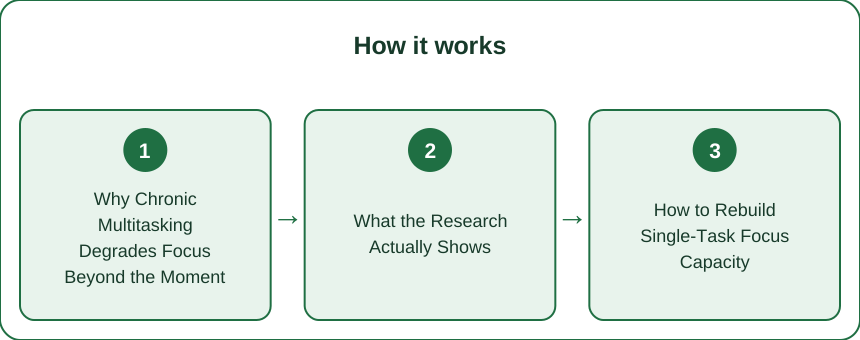
How to Rebuild Single-Task Focus Capacity
The practical approach: the scheduled-single-tasking-blocks (the deliberately protecting periods of genuinely single-task work, treating sustained focus itself as a trainable skill rather than a fixed trait, from the how-exercise-boosts-your-brain-guide cross-domain trainability logic — the schedule-the-practice-like-any-other-skill), the the-remove-the-toggling-temptation-physically (the physically separating from devices or tabs that enable easy toggling during a protected focus block, since willpower alone competes poorly with an available temptation — the remove-the-option-dont-just-resist-it), the the-start-with-shorter-blocks-and-extend-gradually (the beginning with a genuinely achievable single-task duration and extending it gradually, similar to any skill-building progression, rather than expecting immediate long-duration focus — the build-duration-gradually-like-any-trained-capacity), the the-notice-and-interrupt-the-urge-to-switch (the building specific awareness of the toggling urge itself as it arises during a focus block, treating the noticing as the actual skill being practiced — the awareness-of-the-urge-is-the-trainable-part), the the-reduce-passive-background-multitasking-too (the cutting back on habitual lower-stakes multitasking, like background scrolling during other tasks, since the pattern itself is what’s being retrained, not just the high-stakes instances — the retrain-the-pattern-broadly-not-just-in-the-big-moments), and the frame (the rebuilding process as scheduled single-task blocks, physically removing toggling temptations, gradually extending duration, practicing noticing the switching urge itself, and reducing even low-stakes passive multitasking — treating focus as a retrainable capacity, which the evidence suggests it genuinely is).
Research on chronic multitasking suggests it does more than split attention in the moment — because true simultaneous processing is largely an illusion of rapid task-switching, habitual toggling appears to train the brain toward that pattern as a default, with studies comparing heavy and light media multitaskers finding measurable, though still primarily correlational, differences in sustained attention performance. The evidence is strongest for digital media multitasking specifically, with real variation by study design, age, and the type of multitasking involved — background low-stakes multitasking shows far less concerning effect than cognitively demanding task-switching. Because the pattern is trained rather than fixed, it’s also reversible: scheduling protected single-task blocks, physically removing toggling temptations like open tabs and phones, starting with short durations and extending them gradually, practicing noticing the urge to switch as it arises, and cutting back on even low-stakes passive multitasking habits all work toward rebuilding the brain’s capacity for sustained single-task focus.
Keep Reading
This article is for general informational purposes only and is not medical advice. Always consult a qualified health professional for guidance specific to you.