The New-Skill Prescription: Why Learning Hard Things Is Brain Training
The best brain training doesn’t feel like training — it feels like being bad at something new. Adult skill learning (the language, the instrument, the dance class) drives neuroplasticity in ways puzzle apps can’t touch. The new-skill prescription: the science, the sweet spot and the menu.

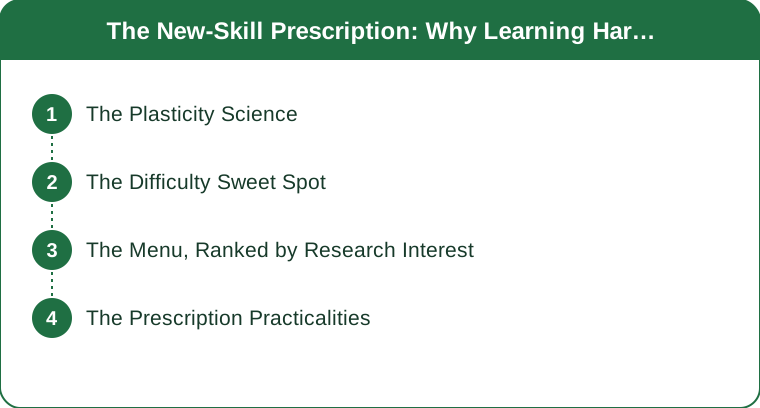
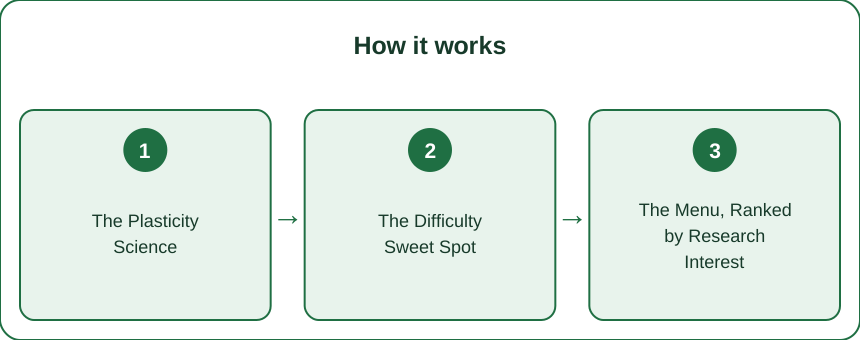
The Plasticity Science
Why new skills build brains: learning demands new neural connections (novelty plus challenge is the plasticity trigger — the brain rewires when it must, not when it’s comfortable), the effortful-struggle finding (the feeling of being bad at something IS the growth signal — fluency is the receipt, struggle is the purchase), and the landmark studies (adults learning juggling, languages and instruments show measurable brain-structure changes within months — and the aging research keeps finding that sustained novel-skill engagement associates with cognitive resilience; the brain’s use-it-or-lose-it is really use-it-NEW-or-lose-it).
The Difficulty Sweet Spot
Calibrating the challenge: too easy does nothing (the thousandth crossword is comfort, not training — the puzzle-app plateau problem), too hard breaks the habit (frustration past the fun threshold ends hobbies in week two), the desirable-difficulty zone (challenged but progressing — roughly ‘succeed with effort most sessions’; the feeling of a good workout, cognitively), and the progression duty (skills must keep steepening — the moment a hobby runs on autopilot, its brain-training wage drops; new pieces, new levels, new vocabularies keep the payroll running).

The Menu, Ranked by Research Interest
The high-yield hobbies: languages (the most-studied — bilingualism’s cognitive-reserve associations are a research pillar; apps count, conversation counts double), instruments (the full-brain workout — motor, auditory and reading systems in concert; adult beginners show robust plasticity), complex dance (choreography is memory-plus-motor — the dance-and-cognition findings keep recurring; the K-pop and salsa worlds are accidental neuroscience), and the craft-and-strategy tier (pottery, chess, drawing — spatial and planning systems getting novel work). The common thread: multi-system, progressive, engaging enough to continue.
The Prescription Practicalities
Making it stick: one skill at a time (the plasticity budget concentrates — serial hobbyists beat parallel dabblers), the twenty-minute frequency rule (short-and-often beats weekend marathons for skill consolidation — sleep between sessions is when learning writes to disk), the community multiplier (classes and clubs add the social-cognition layer plus the adherence glue — the bookclub-and-choir crowd is double-dipping), and the permission slip (being publicly mediocre at something new after 40 is the whole point — the brain doesn’t grade on talent; it pays on struggle). The prescription: pick the thing you’ve always mentioned wanting to try. That one.
Novel plus hard plus progressing, twenty minutes often, one skill at a time, mediocrity is the medicine. The brain trains on new struggle — and the hobby you keep postponing is the prescription.
Keep Reading
This article is for general informational purposes only and is not medical advice. Always consult a qualified health professional for guidance specific to you.