How Chronic Stress Quietly Rewires the Brain Circuits Behind Focus
Quick Answer: Chronic stress doesn’t just make focus feel harder in the moment — over weeks and months it physically shifts activity away from the prefrontal cortex (your focus and planning center) toward the amygdala (your threat-detection center), and this shift is measurable, gradual, and reversible with the right sustained changes.
You used to be able to sit down and concentrate for an hour without much effort. Now even ten focused minutes feels like a fight. That change isn’t a willpower problem — it’s a documented shift in which brain regions are running the show.

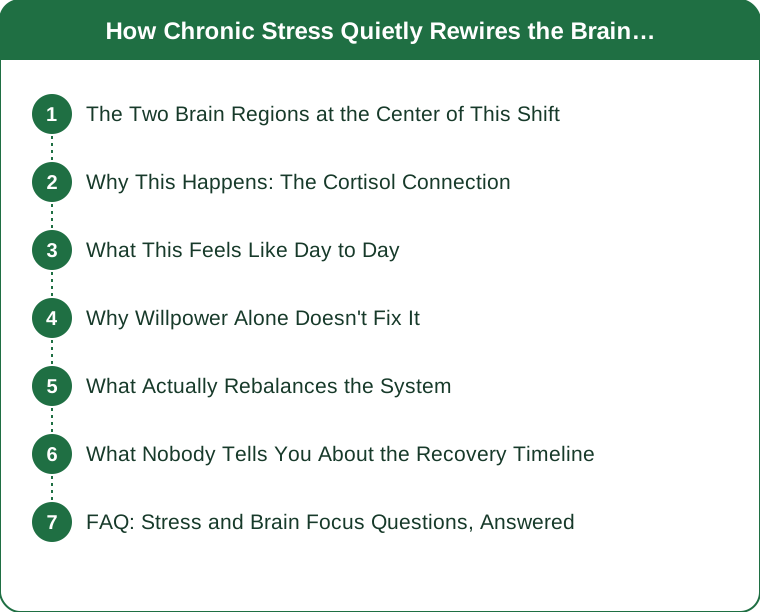
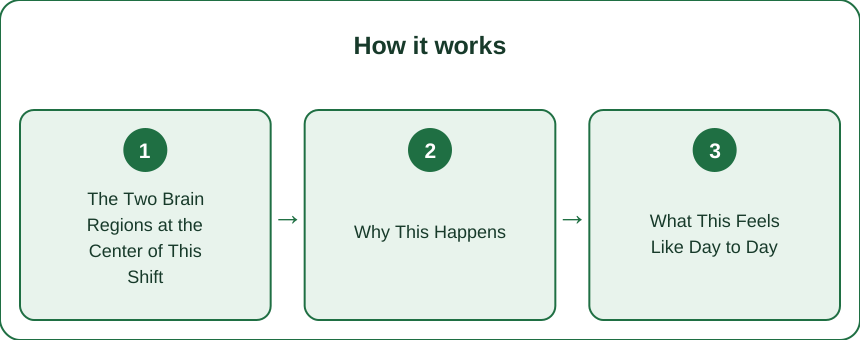
The Two Brain Regions at the Center of This Shift
The prefrontal cortex handles sustained attention, planning, and impulse control — the mental machinery focus actually runs on. The amygdala handles threat detection and triggers the stress response. Under normal conditions, these regions work in balance, with the prefrontal cortex able to override amygdala-driven urgency when there’s no real danger. Under chronic stress, that balance shifts: the amygdala becomes more reactive and better-resourced, while prefrontal cortex activity — and even its physical volume in some studies — decreases with sustained cortisol exposure.
Why This Happens: The Cortisol Connection
Cortisol, the primary stress hormone, is useful in short bursts — it sharpens focus during an acute, real threat. But chronically elevated cortisol has the opposite effect over time, impairing the prefrontal cortex’s ability to regulate attention and suppressing the growth of new neural connections in that region. Meanwhile, chronic cortisol exposure has been shown to strengthen amygdala connections, making the threat-detection system more sensitive and quicker to hijack attention even for minor, non-threatening triggers like a notification or a slightly tense email.
What This Feels Like Day to Day
This shows up as a lower threshold for distraction (small interruptions feel more urgent than they are), difficulty returning to a task after being pulled away from it, and a persistent low-grade sense of urgency even during genuinely calm moments. Many people describe this as ‘wired but tired’ — simultaneously overstimulated and mentally exhausted, which is a fairly direct behavioral signature of amygdala-dominant processing.

Why Willpower Alone Doesn’t Fix It
Trying to ‘focus harder’ when the underlying circuitry has shifted toward threat-detection dominance is fighting the wrong battle — it’s asking a system that isn’t currently in charge (the prefrontal cortex) to simply try harder, when the real lever is reducing the chronic stress load that shifted control away from it in the first place.
What Actually Rebalances the System
Regular aerobic exercise has some of the strongest evidence for supporting prefrontal cortex function and reducing baseline cortisol over weeks of consistency. Adequate sleep is non-negotiable, since sleep deprivation independently impairs prefrontal function on its own, compounding any stress-driven shift. Structured relaxation practices — even brief daily ones — measurably reduce amygdala reactivity over consistent weeks-long practice, not from a single session.
What Nobody Tells You About the Recovery Timeline
Unlike acute stress, which resolves in hours, chronic stress-driven changes in brain function typically take weeks to months of consistent lower-stress conditions to meaningfully reverse — this is why a single relaxing weekend rarely restores focus the way people expect, while a sustained few months of better sleep, movement, and stress management genuinely can.
FAQ: Stress and Brain Focus Questions, Answered
Can chronic stress cause permanent brain changes?
Most documented changes, including prefrontal cortex volume changes, are considered reversible with sustained reduction in chronic stress, though the timeline for full reversal varies by individual and stress duration.
Does caffeine help or worsen stress-related focus problems?
Caffeine can temporarily mask fatigue but doesn’t address the underlying cortisol-driven imbalance, and excessive use can worsen the ‘wired but tired’ feeling many people already experience under chronic stress.
How is chronic stress different from occasional everyday stress in terms of brain impact?
Occasional stress activates and then resolves the same circuitry without lasting structural change, while chronic, unresolved stress over weeks or months is what drives the measurable prefrontal-versus-amygdala shift described here.
TL;DR:
- Chronic stress shifts brain activity from the prefrontal cortex (focus) toward the amygdala (threat detection)
- Elevated cortisol over time impairs focus circuitry while sensitizing threat-detection circuitry
- This produces a ‘wired but tired’ feeling, not a willpower failure
- Exercise, sleep, and consistent relaxation practice — over weeks, not days — measurably rebalance the system
This is general information, not medical advice — persistent focus or mood changes are worth discussing with a healthcare provider.
Keep Reading
This article is for general informational purposes only and is not medical advice. Always consult a qualified health professional for guidance specific to you.