Is Screen Time Actually Bad for Brain Fitness, or Is It More Complicated?
Quick Answer: The type and context of screen time matters more than total hours — passive scrolling has a different cognitive impact than active, engaging screen use like language learning apps or video calls with family, so blanket ‘reduce all screen time’ advice misses an important distinction.
Most brain fitness advice treats all screen time as equally concerning. The research picture is genuinely more nuanced than that framing suggests.

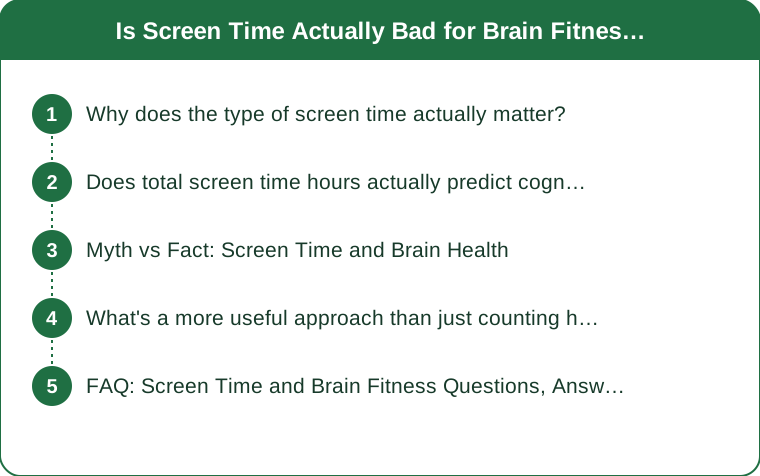
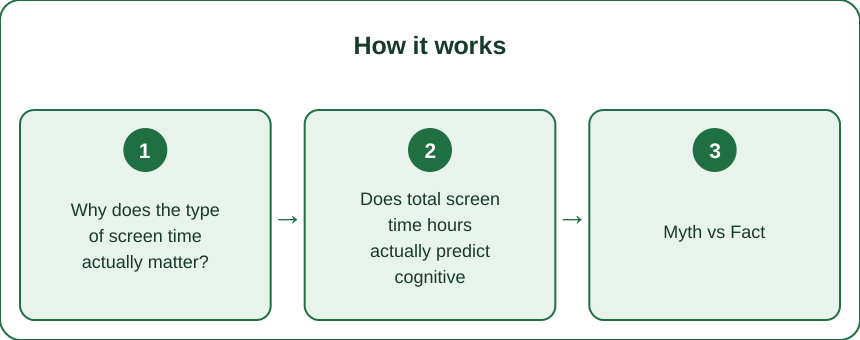
Why does the type of screen time actually matter?
Passive consumption (endless scrolling, autoplay video feeds) tends to correlate with lower engagement and has been associated with attention and mood concerns in research, largely because it requires minimal active cognitive effort.
Active, effortful screen use — learning a language, engaged video calls, certain puzzle or strategy games — requires genuine cognitive engagement and shows a meaningfully different research profile than passive scrolling, despite both counting as ‘screen time’ in most tracking apps.
Does total screen time hours actually predict cognitive decline?
The research relationship is weaker and more mixed than popular narratives suggest — some studies find associations between very high passive screen time and certain cognitive or attention measures, but total hours alone is a blunt, imprecise metric that doesn’t account for content type or context.
This doesn’t mean screen time is inconsequential — it means the specific pattern (what, when, how passively) matters more than a single hours-per-day number.

Myth vs Fact: Screen Time and Brain Health
Myth: All screen time is equally bad for cognitive health. Fact: Passive and active screen use show meaningfully different research profiles — treating them identically oversimplifies the picture.
Myth: Brain training apps definitively improve real-world cognitive function. Fact: Evidence for dedicated ‘brain training’ apps improving broader cognitive function beyond the specific trained task is mixed and debated among researchers.
Myth: Reducing screen time to zero is the ideal target. Fact: Video calls with distant family, educational content, and certain interactive apps offer genuine value — the goal is intentional use, not elimination.
What’s a more useful approach than just counting hours?
Shift focus to content type and engagement level — replacing some passive scrolling time with active screen use (language apps, video calls, interactive learning) or offline activities (reading, in-person conversation, movement) tends to matter more than an arbitrary total hours cutoff.
Pay attention to screen time before sleep specifically, since blue light and stimulating content close to bedtime has more consistent research support for disrupting sleep quality, which independently affects cognitive function the next day.
FAQ: Screen Time and Brain Fitness Questions, Answered
Is scrolling social media worse for the brain than reading news online?
Both can be passive depending on how they’re consumed, but algorithm-driven infinite scroll feeds tend to encourage more passive, less intentional engagement than actively seeking out specific articles.
Do brain training apps actually work?
They can improve performance on the specific tasks trained, but evidence for broad transfer to general cognitive function is mixed and still debated.
Does screen time before bed actually affect next-day cognitive function?
Yes — disrupted sleep from pre-bed screen use has fairly consistent research support for affecting next-day attention and cognitive performance.
TL;DR:
- Content type and engagement level matter more than total screen time hours
- Passive scrolling and active, effortful screen use show different research profiles
- Brain training app benefits may not broadly transfer to general cognitive function
- Screen time before bed has the most consistent link to next-day cognitive effects
The useful question isn’t ‘how many hours’ — it’s ‘what kind, and when.’
Keep Reading
This article is for general informational purposes only and is not medical advice. Always consult a qualified health professional for guidance specific to you.