Training Your Attention Span (Focus Is a Capacity, Not a Trait)
The complaint that you ‘cannot focus like you used to’ is usually treated as a fixed trait or a personal failing, when it behaves far more like a physical capacity — one that shrinks with disuse and rebuilds with training. Here is why attention feels worse, how to rebuild it, and how to practise.

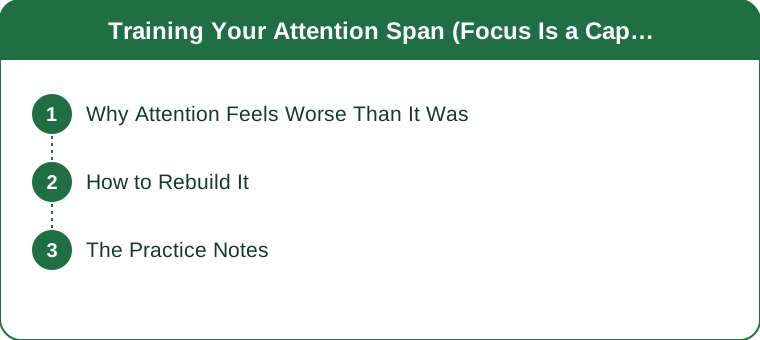
Why Attention Feels Worse Than It Was
A capacity in disuse: the the-attention-behaves-like-a-capacity (the focus behaving like a trainable capacity from the cognitive-exercises logic — the a-capacity), the the-constant-switching-shrinks-it (the frequent task-switching reducing sustained attention from the daily-habits logic — the switching-shrinks-it), the the-novelty-is-always-available (the a constant supply of novelty making effort feel harder from the daily-habits logic — the novelty-always-available), the the-you-rarely-practise-sustained-focus (the modern days rarely requiring long unbroken attention from the daily-habits logic — the rarely-practised), the the-sleep-and-stress-degrade-it (the poor sleep and stress directly degrading focus from the sleep-memory logic — the sleep-and-stress), and the reframe (the shortened attention span as a capacity in disuse rather than a fixed trait — shrunk by constant switching and rarely practised).

How to Rebuild It
Training the capacity: the the-single-tasking-deliberately (the deliberately doing one thing at a time from the daily-habits logic — the single-tasking), the the-timed-focus-blocks (the short timed blocks of uninterrupted work from the daily-habits logic — the timed-blocks), the the-progressively-longer-blocks (the extending the blocks gradually over weeks from the cognitive-exercises logic — the progressively-longer), the the-remove-the-interruption-sources (the removing notifications rather than resisting them from the daily-habits logic — the remove-interruptions), the the-a-boredom-tolerance-practice (the tolerating boredom without reaching for a phone from the daily-habits logic — the boredom-tolerance), the the-reading-long-form-deliberately (the reading long-form text as direct training from the learning-new-skill logic — the long-form-reading), the the-exercise-supports-focus (the exercise directly supporting cognitive function from the exercise-boosts-brain logic — the exercise-supports-focus), and the the-protect-sleep (the sleep being the foundation of attention from the sleep-memory logic — the protect-sleep).
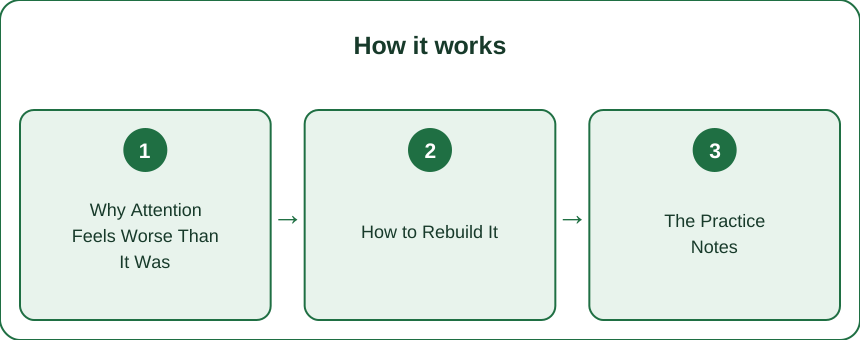
The Practice Notes
Making it stick: the the-start-shorter-than-feels-necessary (the starting with blocks short enough to complete from the cognitive-exercises logic — the start-short), the the-one-block-a-day-is-enough (the a single daily focus block being enough to start from the daily-habits logic — the one-a-day), the the-same-time-same-place (the a consistent time and place reducing the friction from the daily-habits logic — the same-time-place), the the-note-the-urge-and-continue (the noticing the urge to switch without acting on it from the daily-habits logic — the notice-the-urge), the the-do-not-judge-a-bad-block (the accepting poor sessions without abandoning the practice from the daily-habits logic — the do-not-judge), the the-it-rebuilds-over-weeks (the the capacity rebuilding over weeks, not days from the cognitive-exercises logic — the weeks-not-days), the the-pair-it-with-a-learning-goal (the attaching it to something you want to learn from the learning-new-skill logic — the pair-with-learning), and the frame (the attention span as trainable — single-tasked timed blocks, progressively lengthened, with interruption sources removed and sleep protected — focus is a capacity, not a trait. Do one short single-tasked focus block daily, remove the interruption sources, lengthen the blocks gradually, and protect your sleep).
The complaint that you ‘cannot focus like you used to’ is usually treated as a fixed trait or a personal failing, when it behaves far more like a physical capacity — one that shrinks with disuse and rebuilds with training. Attention feels worse because it behaves like a capacity, constant switching shrinks it, novelty is always available, you rarely practise sustained focus, and sleep and stress degrade it. Rebuild it by single-tasking deliberately, using timed focus blocks, progressively lengthening them, removing the interruption sources, practising boredom tolerance, reading long-form deliberately, exercising, and protecting sleep. Practise by starting shorter than feels necessary, doing one block a day, keeping the same time and place, noticing the urge and continuing, not judging a bad block, expecting it to rebuild over weeks, and pairing it with a learning goal. Focus is a capacity, not a trait.
Keep Reading
This article is for general informational purposes only and is not medical advice. Always consult a qualified health professional for guidance specific to you.